
Value Buckets: A Fast Way to Measure Value
Ever stood in front of a big backlog of initiatives, maybe 50+ all sized but no idea which will deliver more value?
Leaders want strategic alignment, stakeholders are convinced their initiative is critical and Product Owners are trying to maximise the value of the work their teams deliver.
Unless you can measure value though, it's hard to compare it.
So how do we decide whether one item is more valuable than another - in fact how do we measure value?
There is no shortage of words describing what value is, “delighting the customer”, “operational efficiency”, “greater market share”, “staff satisfaction", but how do we turn these words into something we can easily measure and compare? Without a shared way to measure value, the loudest voice often wins.
Value Buckets is one of our favourite ways to cut through the noise and create genuine alignment on what provides the most value.
What are Value Buckets?
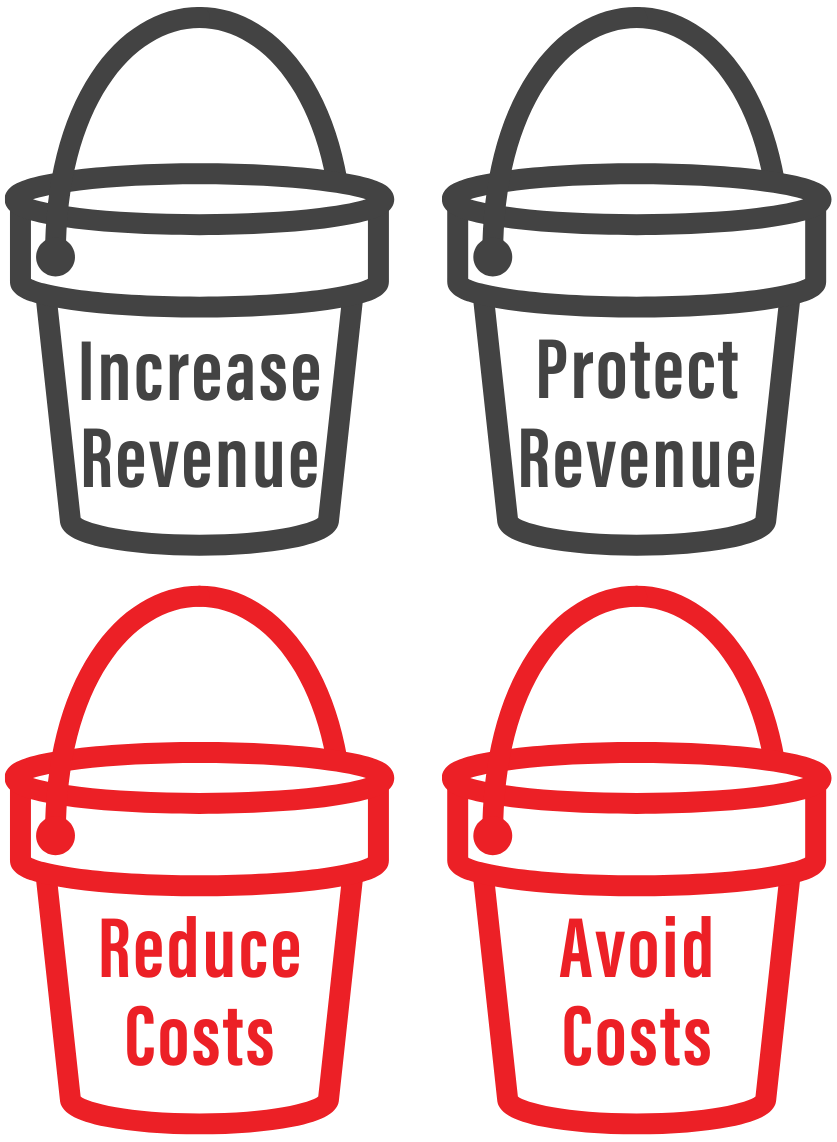
Value Buckets are an economic prioritisation technique that helps teams quickly establish the comparative value of items in their backlog.
By 'economic' we mean measurable value that sustains and grows the organisation - whether that's revenue, cost, impact or reach. Value Buckets provide an economic lens: a way to tag and compare initiatives based on the type of value they deliver.
The technique uses four value buckets:
Increase Revenue - Revenue from increasing sales to existing customers or gaining new ones. This is where "delighting" features and disruptive innovation sit.
Protect Revenue - Current revenue streams from existing customers. The defensive work of keeping up with competitors and maintaining market share.
Reduce Cost - Internal changes that reduce operating costs. Continuous process improvements, workflow automation, overhead reductions - paying down Quality Debt often sits here too.
Avoid Cost - Costs you're not incurring yet but will in future unless you act. Hiring needs, legislative fines, risks to reputation, platform upgrades.
Items can sit in one value bucket or multiple - both are normal. For this exercise we will ask you to pick the primary value bucket. The point is by picking a value bucket we make the type of value visible so you can have honest conversations about whether you're investing in the right places. In a world of scarce resources, we need to be clear about the value our work will deliver.
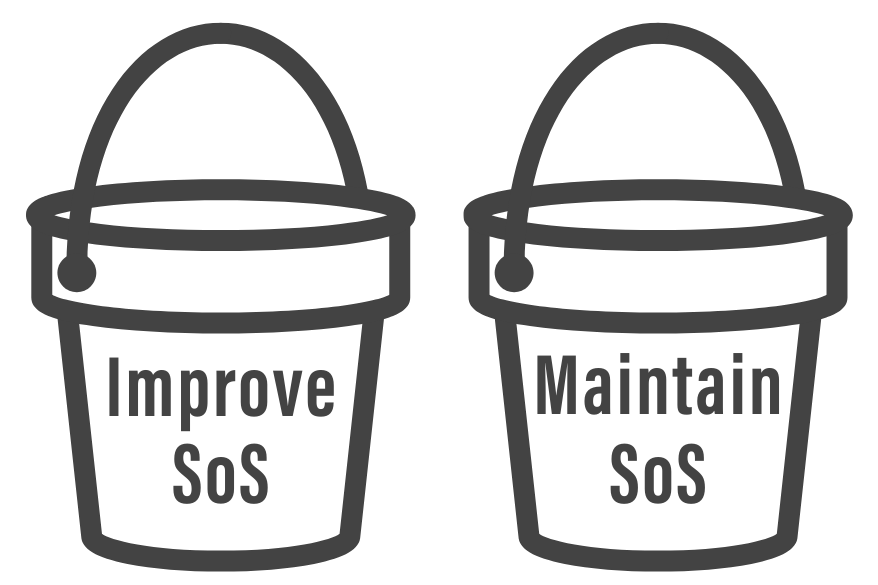
For government and public sector teams, we can reframe the value buckets using Standard of Service (SoS) instead of Revenue.
Improve SoS (vs Increase Revenue) - Greater value delivered to customers. This is where improving social impact sits.
Maintain SoS (vs Protect Revenue) - Ongoing support for existing services which naturally become outdated with passing time and changing societal expectations.
If your organisation has agreed SoS measures for your services, they speed up the conversation about which bucket to use. The Cost buckets remain directly relevant - they apply equally whether the context is profit or social value.
Shout out to Joshua Arnold of Black Swan Farming fame, for the original value buckets idea and Understanding Value. His work has influenced the thinking of many teams trying to define value and understand how it contributes to product prioritisation. His wider blog is well worth a read.
Why We Love It
Value Buckets help shift the conversation by:
Creating a shared language for rapid alignment - teams can tag items quickly without financial analysis paralysis, no complicated spreadsheet formulas needed!
Making the type of value visible - once you can see what bucket each item fills, you can test whether that's actually what you want to be investing in.
Surfacing misalignment fast - if your strategy says grow but everything's in Protect Revenue, that's a conversation worth having.
Giving permission to be deliberate - it's OK if one bucket is heavier than others, as long as that's intentional and aligned with where you're heading.
Moving debates from "everything is important" to "what kind of value does this deliver?" - a question everyone can actually answer.
Forcing honesty - if you can't quickly place an item in a bucket, you probably don't understand what value it's meant to deliver.
When We Use It
We reach for Value Buckets when:
Leadership is prioritising a portfolio of initiatives and needs a consistent comparison framework.
Teams have an unruly backlog and need to rapidly triage what matters.
Stakeholders claim everything is critical using different definitions of value.
Roadmap planning needs explicit reasoning, not just gut feel.
Strategic direction is missing and the team needs to understand what they're actually optimising for.
Strategic direction is set but it's unclear which initiatives actually support it.
It's a fast technique that consistently shifts teams from debating opinions to comparing measurable value, creating genuine alignment on what matters most.
How We Do It
Value Buckets is a fast and dynamic value categorisation exercise, led by the Product Owner. It is not a detailed business analysis reporting activity. There are only 5 steps:
1. Share the details. Read out the title of the item and its description.
2. Pick a bucket. Discuss the item and agree which value bucket the item primarily belongs to.
3. Ask “how much” value? The question depends on the value bucket we picked:
Increase Revenue - how much additional revenue will this generate?
Protect Revenue - how much existing revenue will we lose if we don't do this?
Reduce Cost - how much can we reduce our current operational cost if we do this?
Avoid Cost - how much additional operational cost will we incur if we don't do this?
For government and public sector contexts:
Improve SoS - How much additional impact will this generate?
Maintain SoS - How much existing service quality will we lose if we don't do this?
4. Measure the value. The ideal answer is an actual dollar amount, but that is way too hard to calculate quickly. Fortunately we can quickly achieve the same outcome faster using relative Fibonacci value sizing. The bigger the Fibonacci number, the more valuable the item is. This value drives the prioritisation of the Shoulds and Coulds creating a "genuinely loveable product release” using Brutal Prioritisation.
5. Wrap up. Update the value bucket attributes for this item and add a brief note summarising the team’s value bucket conversations. The note helps when the team later revisit the initial value sizing and need to recall the original assumptions.
Things to Look Out For
Don't overthink the Value Bucket - if you're debating for 20 minutes which bucket something belongs in, make a call and keep moving.
Distribution reveals intent, not balance - you don't need equal numbers in each bucket. What matters is whether your distribution matches your strategic direction.
Everything gravitates to Increase Revenue - challenge this. Protect Revenue and Avoid Cost often hold more immediate value, especially in established organisations.
Value is only the first step - Value Buckets show the type of value you're chasing. Sizing shows how much effort is required. Our Brutal Prioritisation approach visually demonstrates the consequences of leaving something out. Together, they give you a measurable way to compare and prioritise economically.
Try It With Your Team
We recommend trying Value Buckets on your current backlog before using it in a high-stakes portfolio session. That way you can focus on learning the subtlety of this technique and avoid the politics.
Take your top 20 initiatives and quickly place them in buckets. Go with your gut - which bucket does each one belong in? Speed is deliberate. You'll surface where people have different instincts about value and that's where useful conversations start.
Once you can see the distribution, ask: is this actually where we want to be investing? It's fine if most of the work is in one or two buckets - as long as that's deliberate and matches your strategic direction.
Our RAFT Series

✦ Our CoLab RAFTs - Rapid Agile Forecasting & Tracking skills - are practical tools we use every day in our coaching and training to help teams make work visible and performance-focused.
Curious? Let’s talk toni@agilecolab.com
Version 3, last updated on 7 September 2026